Understanding the Role of AI in Modern Content Creation
How AI Transforms Traditional Content Workflows
Artificial intelligence has steadily reshaped the way content is produced and managed across various platforms. Traditional content workflows, often labor-intensive and time-consuming, are now streamlined by AI’s ability to automate repetitive tasks. For instance, AI tools can swiftly generate topic ideas, draft initial versions of articles, or analyze vast datasets to uncover the best keywords. This shift not only accelerates the creation process but also frees up human creators to focus on strategic elements, such as storytelling and brand voice. As a result, AI becomes less of a replacement and more of a powerful ally in content development.
Balancing Automation with Creative Integrity
While AI brings efficiency and predictive capabilities, it’s crucial to preserve the creative spark that gives content its unique appeal. Automation can handle the groundwork, but it often lacks the nuance and emotional depth that human writers provide. Striking a balance means using AI-generated content as a foundation and refining it through human insight. This approach ensures that the final output maintains authenticity and resonates with the target audience. After all, maintaining quality is paramount, even as teams strive to meet faster production demands.
Top AI Tools Revolutionizing Content Creation
AI-Powered Writing Assistants
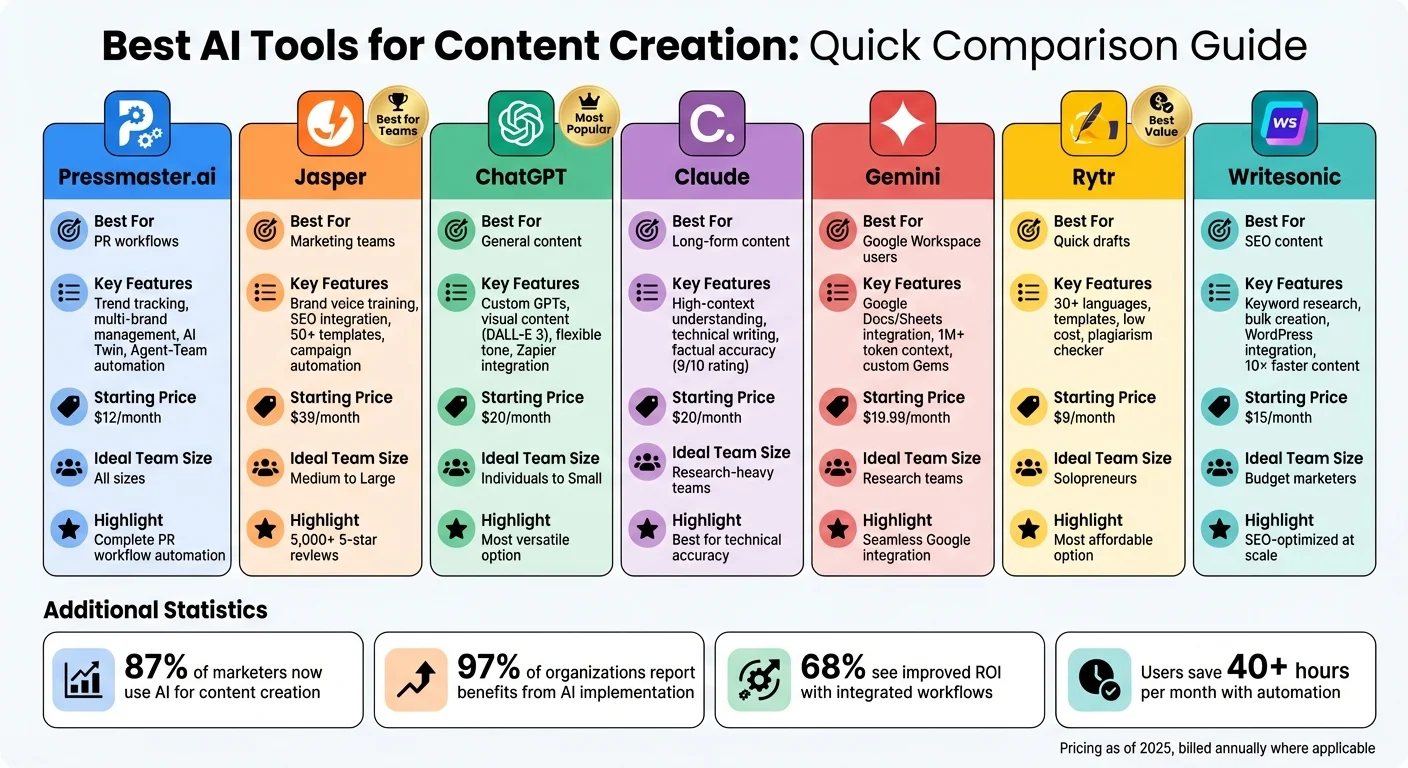
Writing assistants like Jasper.ai and Copy.ai have become indispensable thanks to their ability to generate clear, engaging content quickly. Jasper.ai is excellent for crafting detailed blog posts, supporting users with templates that guide content structure while still allowing customization. On the other hand, Copy.ai excels in producing punchy social media posts and compelling call-to-action statements that instantly capture attention. These tools help writers overcome blocks and maintain productivity, especially vital when juggling multiple projects.
Intelligent Research and Data Gathering Platforms
Research is a cornerstone of effective content, but it can also be one of the most tedious phases. AI-driven platforms like Surfer SEO not only automate keyword research but also analyze competitor strategies, helping creators optimize their content for search engines without guesswork. This technology delves into data patterns that human teams might miss, providing actionable insights to improve SEO performance. By harnessing such tools, content teams can better tailor their output to meet competitive market demands.
Creative Design and Multimedia Tools Using AI
Beyond writing, AI tools are also transforming multimedia content creation. Platforms such as Canva’s AI features and Lumen5 aid in producing visually appealing graphics and videos that complement written material. These tools simplify design processes, making it easier for content creators without extensive graphic design skills to produce professional-quality visuals. Integrating multimedia seamlessly into content workflows enhances engagement and broadens the appeal of marketing efforts.
Criteria for Choosing the Best AI Content Tools
Maintaining Quality While Increasing Efficiency
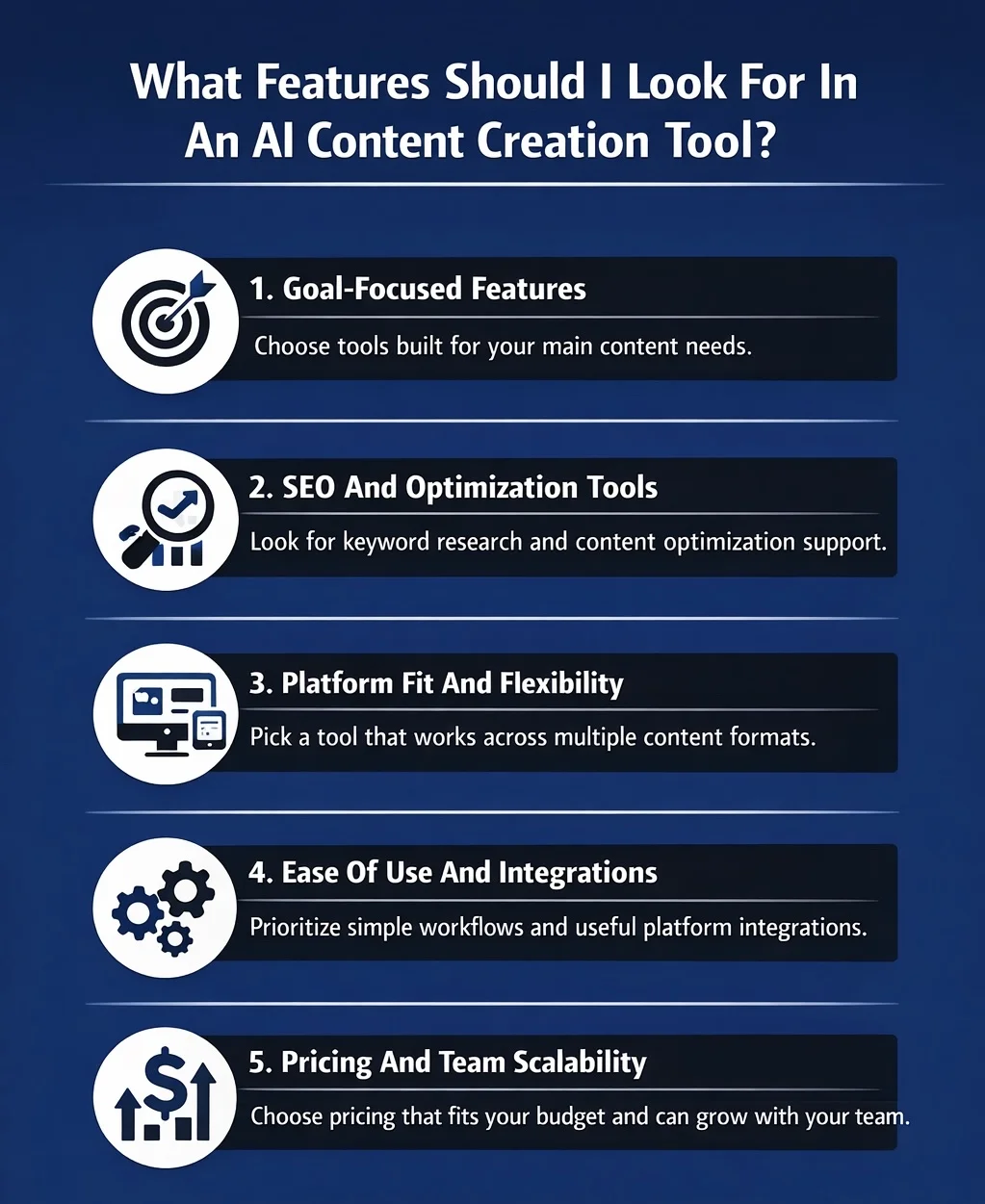
Choosing AI tools requires a careful look at how well they uphold content quality. Efficiency gains are meaningless if the output feels robotic or off-brand. Look for tools that offer flexibility, such as customizable templates and tone adjustments, allowing the content to align closely with your unique voice. Using AI-generated drafts as a starting point but applying human editing is a sound strategy to keep the tone natural and contextually accurate.
User-Friendliness and Integration Capabilities
Another essential consideration is how easily AI tools fit into existing workflows. User-friendly interfaces minimize the learning curve, enabling teams to adopt new technology quickly. Equally important is the ability to integrate with third-party services like Grammarly for grammar checks or publishing platforms for seamless content deployment. When AI tools communicate well with your suite of software, they enhance productivity rather than disrupt it.
Cost-Effectiveness and ROI Considerations
While AI can reduce costs associated with outsourcing or lengthy content cycles, the pricing structure of advanced features or enterprise versions should be carefully assessed. Free trials or basic plans offer an excellent way to evaluate whether a tool’s benefits justify its expense. Focus on solutions that provide strong keyword analysis and competitive insights, as these often translate directly into improved search engine rankings and traffic, delivering a tangible return on investment.
Implementing AI Tools Without Compromising Quality
Strategies for Seamless Human-AI Collaboration
Successful integration of AI tools depends on fostering a collaborative environment where human creativity and AI efficiency complement each other. Encouraging teams to view AI as a partner rather than a replacement helps alleviate resistance and maximizes tool usage. Establishing clear protocols for when and how to use AI-generated drafts ensures consistency in quality and brand messaging while keeping the creative process agile.
Quality Assurance Techniques in AI-Assisted Content
Quality assurance becomes even more critical when AI is part of the writing process. Content produced by AI should always undergo human review to catch nuances that algorithms may miss. Techniques like peer editing, tone analysis, and fact-checking are fundamental. Additionally, leveraging tools like Grammarly can enhance grammar and style, preventing errors that might otherwise slip through when relying heavily on AI drafts.
Case Studies: Success Stories Using AI in Content Workflows
Content Marketing Agencies
Many content marketing agencies have integrated AI tools to enhance their scalability. By automating keyword research and initial content drafts, agencies can handle larger client bases without sacrificing quality. This approach not only speeds up turnaround times but also enables teams to focus on crafting strategic campaigns that deliver measurable results. The use of specialized AI platforms tailored to different content types has been a game changer in maintaining brand consistency across diverse industries.
Freelance Content Creators and Small Teams
For freelancers and small teams, AI tools offer a way to punch above their weight. They can compete with larger groups by reducing time spent on research and ideation, allowing more focus on custom, high-quality writing. Many take advantage of free or trial versions to test what fits best with their workflow before investing. This flexibility has democratized content creation, empowering smaller players to deliver professional-grade work efficiently.
Future Trends in AI-Driven Content Creation
Emerging Technologies to Watch
The future holds exciting possibilities as AI continues to evolve. Advances in natural language processing and machine learning are making AI-generated content more context aware and emotionally intelligent. Emerging tools are likely to offer even deeper personalization, adapting content dynamically based on audience behavior and preferences. Additionally, the integration of AI with augmented reality and voice search is set to redefine how audiences experience content online.
Potential Challenges and Ethical Considerations
Despite the benefits, AI-driven content creation raises important ethical questions and practical challenges. Over-reliance on AI without diligent human oversight can lead to issues with misinformation, bias, and loss of authentic voice. Transparency about AI involvement in content production is becoming increasingly important to maintain trust with audiences. As technology advances, creators must balance innovation with responsibility, ensuring that content remains truthful, inclusive, and of high quality.