

Understanding the Role of API Response Validation in Microservices
Defining API Response Validation
API response validation is a crucial process that ensures the data returned from an API call adheres to expected formats, schemas, and business rules. In microservices architectures, where individual services communicate extensively through APIs, validating these responses guarantees that each service receives reliable, consistent data from its counterparts. Essentially, it acts as a gatekeeper, catching inconsistencies early, which helps to prevent cascading failures within a distributed system.

Common Data Consistency Challenges in Microservices
Microservices, by nature, increase complexity in data flows. When multiple services are interacting, maintaining uniform data is not straightforward. Communication complexity arises from numerous service dependencies, and inconsistent API designs or ambiguous endpoints can exacerbate this. An often overlooked challenge is backward compatibility; as APIs evolve, failing to maintain versions can disrupt existing consumers, leading to data mismatches or errors. Additionally, a lack of strong API specifications and insufficient testing before production further contribute to inconsistencies. Without clear coordination across development teams, microservices risk diverging in how they handle data, which ultimately undermines system reliability.
Key Techniques for Automating API Response Validation
Schema Validation Approaches
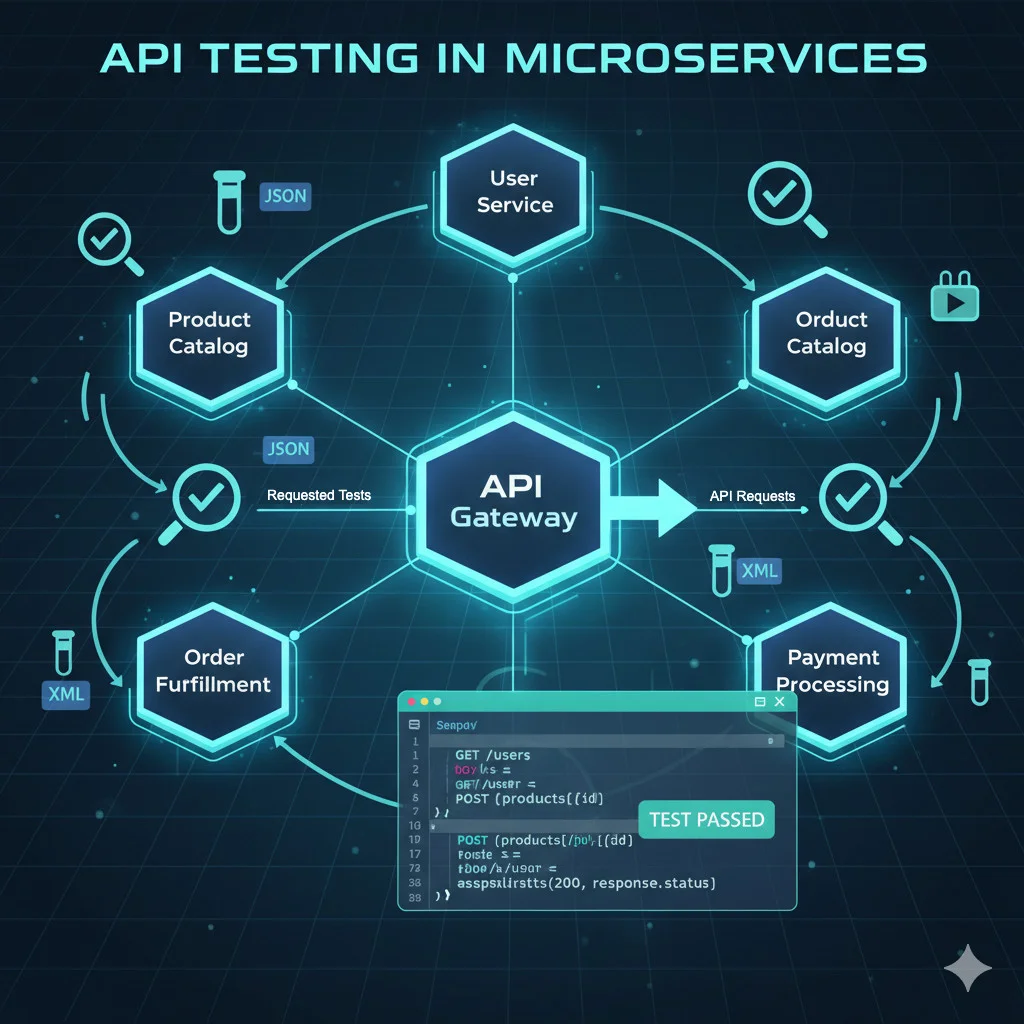
One of the foundational methods of validating API responses is schema validation. By defining strict data structures using formats like JSON Schema or XML Schema, automated tools can quickly verify that responses conform to defined expectations. This helps catch errors such as missing fields, incorrect data types, or unexpected values before they propagate. Schema validation simplifies debugging by providing immediate, machine-readable feedback on data inconsistencies, which reinforces data integrity across services.
Contract-Driven Development and Testing
Contract-driven development elevates validation by treating API specifications as formal contracts between services. Using tools like Pact or OpenAPI specifications, developers define expected request and response formats, which become the basis for automated contract testing. This approach ensures that any changes on one side of the API either maintain compatibility or explicitly break the contract, triggering alerts. Contract testing is invaluable in microservices, where independent teams develop services separately, because it aligns expectations and reduces integration surprises.
Utilizing Mock Services for Early Validation
Before integrating or deploying services, it’s beneficial to use mock servers that simulate API behavior based on specification documents. These mocks enable early validation of response formats and interaction patterns without requiring fully implemented services. They also assist frontend developers and testers by providing reliable, consistent endpoints to work against. By incorporating mock services, teams can uncover design flaws and inconsistencies early, fostering smoother collaboration and enabling incremental development with confidence.
Integrating Automated Validation into Continuous Integration Pipelines
Tools and Frameworks for Automation
Automation is key to embedding API response validation into continuous integration (CI) workflows. Popular tools like Postman, SoapUI, and Newman can execute defined tests automatically on each build. Frameworks such as JUnit with REST-assured support complex validation scenarios in Java environments. Additionally, API specification-driven tools, including Swagger Codegen and OpenAPI Generator, accelerate the creation of test suites and mock servers. Integrating these tools ensures that every code change is validated against API contracts, dramatically reducing the risk of data inconsistencies reaching production.
Best Practices for Seamless Pipeline Integration
To maximize the benefits of automation, it’s important to design CI pipelines with validation as a mandatory step, not an afterthought. Running schema and contract validations early and often detects issues before manual testing, reducing feedback cycles. Clear reporting and meaningful error messages help developers quickly understand and resolve problems. Moreover, coupling validation with performance and security tests makes the pipeline a comprehensive gatekeeper for API quality. Encouraging cross-team collaboration around shared API documentation further aligns development efforts and prevents fragmented implementations.
Case Studies: Boosting Data Consistency through Validation Automation
Real-World Implementation Examples
Many organizations have reaped significant benefits from automating API response validation. For instance, a large e-commerce platform transitioned from manual testing to employing OpenAPI-driven contract testing, which reduced integration errors by 60% and accelerated the release cycle. Another case involved a fintech company leveraging mock services and continuous validation in their pipeline, enabling faster onboarding of third-party partners while maintaining strict data integrity.
Lessons Learned and Common Pitfalls
Despite its advantages, adopting automated validation is not without hurdles. Common mistakes include neglecting API versioning, which causes breaking changes, and failing to maintain comprehensive API specifications. Skipping early mocking and testing leads to late discovery of issues, often during production. Teams also sometimes overlook the need for uniform error handling and consistent endpoint design, which complicates validation. These pitfalls highlight the importance of thorough planning, ongoing communication, and choosing appropriate tools early in the development cycle.
Future Trends in API Validation for Microservices
AI-Powered Validation Tools
The next evolution in API response validation lies in artificial intelligence. AI-driven tools can learn from historical API interactions to detect anomalies, predict potential failures, and even suggest corrections. These intelligent validators can adapt to subtle changes without rigid schema enforcement, providing a more flexible yet reliable validation process. As AI matures, it promises to reduce manual effort further and enhance the robustness of microservices architectures.
Adaptive and Self-Healing Validation Mechanisms
Looking ahead, we can expect validation systems that are adaptive and self-healing. These mechanisms will not only identify inconsistencies but also automatically trigger remediation steps such as rolling back incompatible changes or adjusting schemas dynamically. This approach could minimize downtime and improve resilience by allowing microservices to continue operating smoothly despite unexpected changes or faults. Such innovations will redefine how teams maintain data consistency and service reliability in increasingly complex environments.


