
Introduction to Prompt Engineering in Business Automation
What is Prompt Engineering?
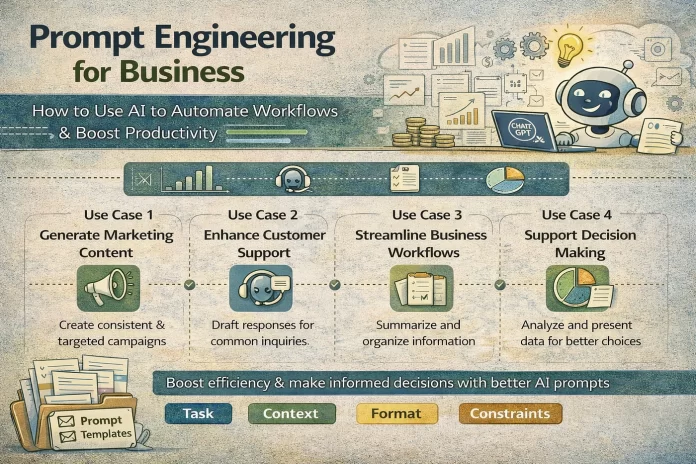
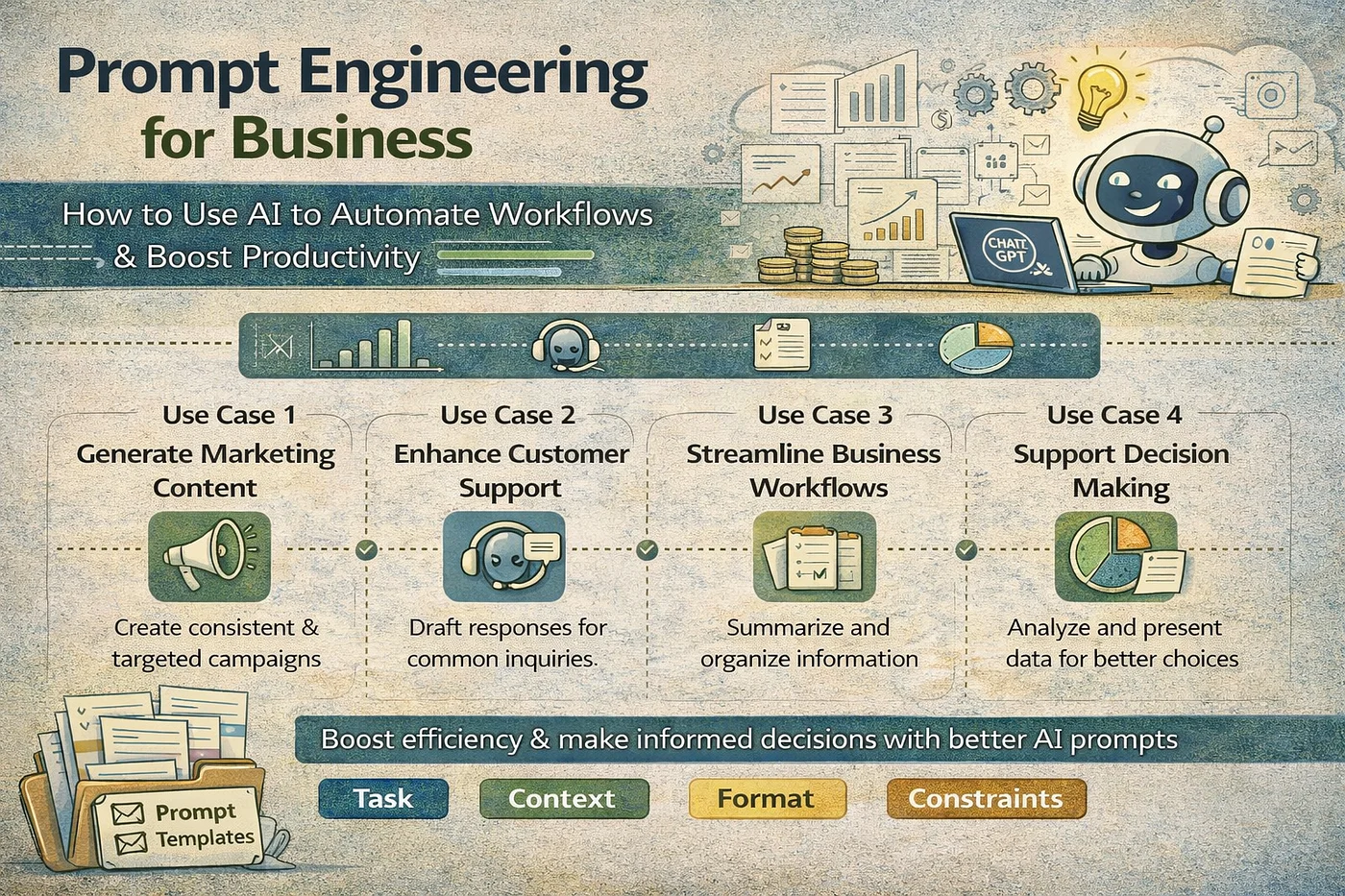
Prompt engineering involves designing and refining text-based instructions, known as prompts, to effectively communicate with large language models (LLMs) like ChatGPT. Instead of traditional programming, prompt engineering uses natural language inputs to guide AI systems in performing specific tasks. This technique transforms AI from a complex tool into an accessible resource for automating business workflows, enabling users without coding skills to harness powerful AI capabilities.
Benefits of Automating Routine Tasks
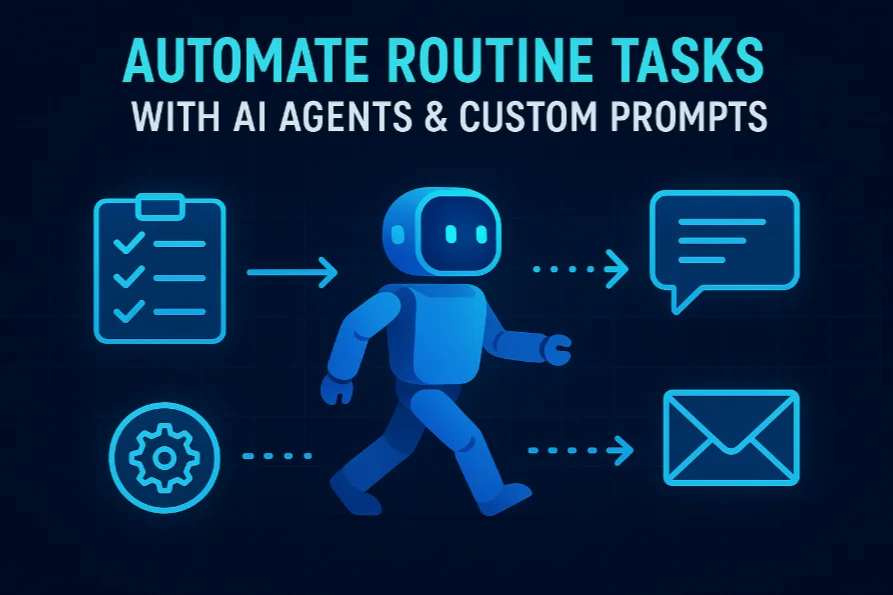
Automating routine business tasks through prompt engineering cuts down on repetitive manual effort, accelerates processes, and reduces human error. It frees employees to focus on creative or strategic work that requires human judgment. Furthermore, AI-driven automation enhances consistency and scalability across operations. Tasks like generating reports, answering customer inquiries, or processing data become faster and more cost-effective when automated properly.
Overview of the Guide
This guide provides a step-by-step walkthrough on how to use prompt engineering to automate common business tasks. You will learn to identify suitable workflows, craft effective prompts, integrate AI tools into your systems, optimize results, and maintain automation solutions over time. Through practical advice and real-world examples, businesses of all sizes can unlock the potential of AI without requiring deep technical expertise.
Understanding Routine Business Tasks Suitable for Automation
Identifying High-Impact Tasks
Routine tasks that consume significant time but follow predictable patterns are prime candidates for automation. These include activities such as data entry, customer support ticket triage, scheduling meetings, invoice generation, and basic content creation. The key is to select tasks where AI can perform reliably and deliver measurable improvements in efficiency, accuracy, or throughput.
Challenges in Manual Processes
Many manual processes are bogged down by issues like inconsistent data quality, lengthy turnaround times, and dependency on individual skill sets. Human operators may also introduce errors or experience cognitive fatigue when handling repetitive work. Additionally, scaling manual workflows to meet growing business demands often proves costly and inefficient, prompting organizations to seek AI-driven alternatives.
Fundamentals of Prompt Engineering
Core Principles and Concepts
The effectiveness of prompt engineering hinges on clear communication with an AI model. This requires understanding the model’s capabilities and behavior, and structuring inputs to guide it to generate the desired output. Key concepts include context setting, example provisioning, and specifying roles or tasks. Prompt engineering is iterative, relying on testing and refinement to achieve optimal results.
Types of Prompts Used in Automation
Automation employs various prompt types depending on the complexity of the task. Zero-shot prompting provides an instruction without examples, expecting the AI to respond correctly based on general understanding. Few-shot prompting includes examples to illustrate the task. Chain-of-thought prompts encourage stepwise reasoning, while role-based prompts assign the AI a persona or function to emulate. Combining these approaches enhances AI performance in diverse business contexts.
Step 1: Defining Your Automation Goals
Setting Clear Objectives
Begin by articulating what you want to achieve through automation. Define specific goals such as reducing processing time, improving accuracy, or freeing employee time for higher-value work. Clear objectives create focus and guide prompt design decisions. Consider both immediate benefits and long-term scalability in your goal setting.
Measuring Success Metrics
Establish quantifiable metrics to evaluate the impact of your automation efforts. These could include operational KPIs like task turnaround time, error rates, customer satisfaction scores, or cost savings. Having measurable criteria enables objective assessment and continuous improvement of your prompt engineering strategies.
Step 2: Crafting Effective Prompts
Tips for Writing Clear Prompts
Effective prompts are precise, detailed, and rich in context. Start by specifying the task clearly, then provide any necessary background information or examples. Incorporate role-based instructions to help the AI understand its function. Avoid ambiguity by using straightforward language and delimiting input and output expectations. Testing variations can uncover which prompt structures yield the best results.
Common Pitfalls and How to Avoid Them
One frequent mistake is using vague prompts that confuse the AI, resulting in irrelevant or incorrect outputs. Failing to include sufficient context or illustrative examples also diminishes accuracy. Additionally, treating prompt engineering as a niche expertise rather than an accessible skill limits adoption. To avoid these issues, invest in training and follow best practices while experimenting systematically.
Hands-on: Building Your First Automation Prompt
Selecting a Use Case
Choose a straightforward business task suitable for automation, such as generating weekly sales summaries or responding to frequently asked customer queries. Starting with a focused use case helps clarify your approach and yields tangible benefits early in the process.
Creating and Testing Your Prompt
Draft a prompt that clearly instructs the AI on the task, including relevant context and examples if needed. Run tests with sample inputs, examine the outputs, and refine your prompt iteratively. Monitor how changes impact the quality and relevance of AI responses until you achieve reliable, consistent results ready for integration into workflows.
Integrating Prompt Engineering with Your Business Tools
Popular Platforms and APIs
Numerous platforms provide APIs that facilitate prompt-based AI automation, such as OpenAI’s GPT APIs, Microsoft Azure AI, and no-code tools like Zapier or Make. Selecting a platform depends on your technical capabilities, existing technology stack, and specific business requirements.
Ensuring Seamless Workflow Integration
Automation is most impactful when integrated smoothly into current business processes. Connect AI outputs to relevant software systems—such as CRM, ERP, or customer support platforms—to automate task completion end-to-end. Plan for data security, compliance, and user training to maximize adoption and effectiveness.
Advanced Techniques for Optimizing Prompts
Iterative Refinement
Optimization is an ongoing process involving testing different prompt formulations and analyzing resulting AI performance. By systematically adjusting wording, examples, and context, you can improve accuracy and speed. Documenting changes and outcomes supports reproducibility and knowledge sharing.
Leveraging Context and Variables
Incorporate dynamic variables within prompts to tailor AI responses to specific situations or data points. Providing rich contextual information helps the AI generate nuanced outputs that align better with business goals. This strategy enhances flexibility and customization in automation workflows.
Monitoring and Maintaining Automated Processes
Tracking Performance Over Time
Set up mechanisms to continuously monitor key metrics post-deployment. Regularly review AI outputs for accuracy, efficiency, and alignment with objectives. Use logs and dashboards to detect anomalies or degradations early, ensuring sustained automation quality.
Troubleshooting Common Issues
Common challenges include AI hallucinations, bias in outputs, or dropped task performance. Troubleshoot by refining prompts, increasing context, or retraining models if applicable. Maintain a feedback loop with end-users to capture issues and facilitate iterative improvements.
Case Studies: Real-Life Examples of Prompt Engineering in Business
Small Business Success Story
A small marketing agency automated content generation for social media posts using prompt engineering. By teaching employees basic prompt design techniques and leveraging few-shot prompts with examples, they reduced content creation time by 60%, allowing team members to focus on strategy and client engagement.
Enterprise-Level Implementation
A multinational corporation implemented automated prompt engineering (APE) tools to manage complex tax compliance workflows. Their AI agents processed thousands of documents and queries, significantly accelerating turnaround and reducing errors. The enterprise combined manual expertise with APE’s systematic prompt optimization to achieve scalable automation across departments.
Conclusion
Recap of Key Steps
Prompt engineering for automating routine business tasks starts with clearly defining goals and selecting appropriate workflows. Crafting precise, context-rich prompts is fundamental, followed by iterative testing and integration with business systems. Advanced techniques like automated prompt optimization and dynamic context enhance performance. Continuous monitoring ensures sustained success.
Future Trends in Prompt Engineering and Automation
As AI models evolve, prompt engineering will become increasingly accessible and integrated into everyday business functions. Automation will benefit from advances in multi-model coordination and automated prompt refinement techniques. Companies investing in workforce training and AI tool adoption today are well-positioned to harness the full potential of prompt-driven automation in the near future.


