
Introduction to AI Writing Assistants in Marketing
What Are AI Writing Assistants?
AI writing assistants are software tools designed to support content creators by generating text and providing writing suggestions using artificial intelligence. These platforms leverage natural language processing and large language models to create coherent, relevant, and engaging content. For marketing teams, AI writing assistants serve as powerful aids to streamline content production, whether crafting blog posts, social media updates, email campaigns, or ad copy.
Importance of Speed in Content Creation
In the fast-moving world of marketing, speed is crucial. Traditional content creation can be time-consuming, often requiring hours to produce a single piece such as a 500-word blog post. This slow pace can stifle a marketing team’s ability to respond to trends, launch campaigns, or maintain consistent engagement across multiple channels. Accelerating content creation without sacrificing quality is essential to meet growing demand, improve return on investment, and stay competitive.
Top AI Writing Assistants for Marketing Teams
Features That Enhance Content Creation Speed
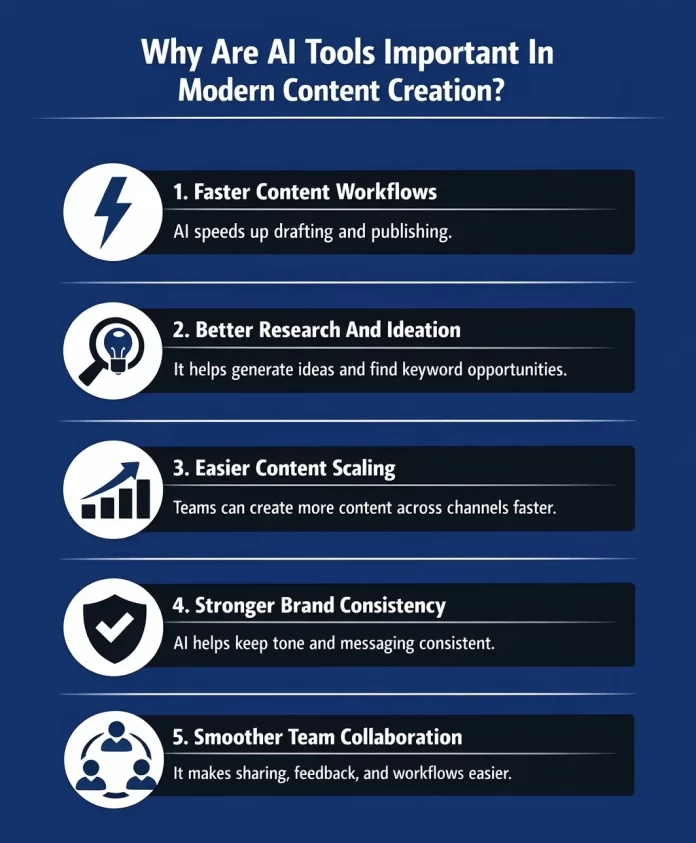
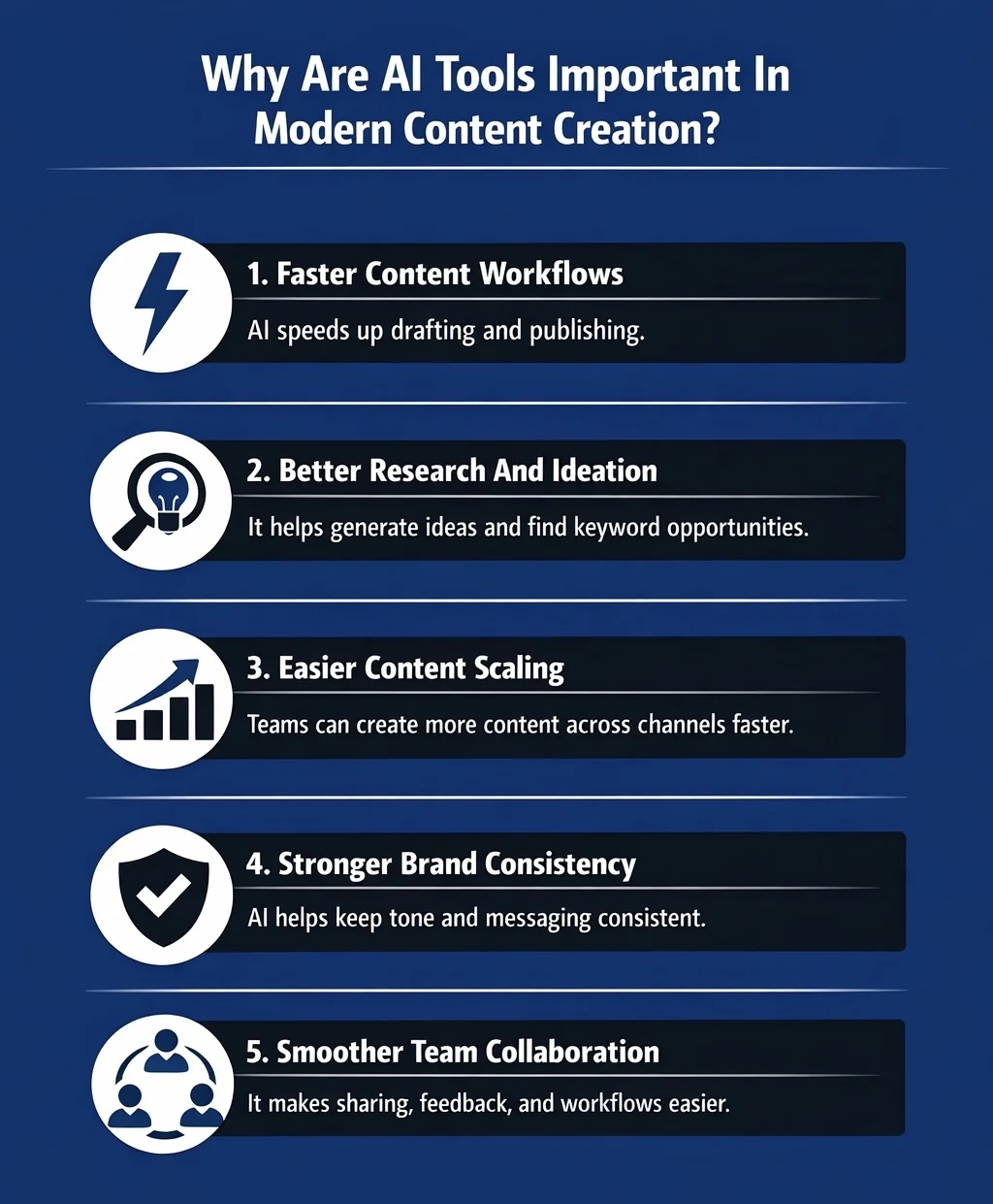
AI writing assistants boost content creation speed by automating ideation, drafting, and optimization tasks. Key features include intuitive text generation based on simple prompts, built-in SEO tools for keyword integration, and templates tailored to different marketing formats. Additionally, many AI tools incorporate collaborative editing environments that allow teams to refine content in real time, reducing revision cycles. Integration with analytics and market data further empowers marketers to produce targeted and performance-driven content swiftly.
Comparative Overview of Leading Tools

Choosing the right AI writing assistant depends on specific content needs. For instance, Jasper.ai excels at generating engaging blog posts and long-form articles, making it ideal for inbound marketing. Copy.ai, on the other hand, is tailored for social media snippets, product descriptions, and short-form content, which helps social teams maintain active engagement. Surfer SEO combines AI writing with detailed SEO optimization, assisting marketers to improve search rankings effectively. Tools like Perplexity and Google’s AI Mode simplify research and data analysis, streamlining workflow further. By evaluating these unique strengths, marketing teams can select tools that best align with their content strategies and speed requirements.
How AI Writing Assistants Boost Marketing Efficiency
Automated Content Generation
The demand for scalable content solutions often overwhelms marketing teams constrained by time and resources. AI writing assistants address this by automating the initial content creation process, producing drafts rapidly based on input parameters. This significantly reduces the hours spent on brainstorming ideas and writing from scratch. As a result, teams can focus more on refining messaging and strategic planning instead of manual composition. Automation not only accelerates output but also ensures consistency across multiple channels, which is crucial for cohesive brand communication.
Error Reduction and Enhanced Consistency
Manual writing is prone to errors and inconsistencies, especially when multiple team members contribute to content creation. AI tools help minimize such mistakes through standardized language models and grammar checks. These assistants maintain tone and style guidelines more consistently than manual efforts, ensuring uniformity in messaging. Moreover, embedded SEO suggestions reduce the risk of missing important on-page elements like keywords or meta descriptions, which are essential for search engine visibility. This combination of error reduction and consistency elevates overall content quality while maintaining speed.
Collaboration Benefits for Teams
AI writing assistants often feature collaborative platforms that enable smooth teamwork. Marketing teams can simultaneously review, edit, and approve content generated by AI, accelerating feedback loops. This real-time interaction fosters creativity and alignment without the delays of traditional back-and-forth communication. Furthermore, AI tools assist non-writers by providing creative prompts and structure, empowering a broader range of team members to contribute to content development. Improved collaboration ultimately leads to faster project completion and richer content diversity.
Implementing AI Writing Assistants in Your Workflow
Choosing the Right Tool for Your Team
Selecting an AI writing assistant should begin with a clear understanding of your team’s content goals and existing pain points. Identify the predominant type of content you produce—whether blogs, social media posts, ads, or SEO articles—and choose tools optimized for those formats. For example, Jasper.ai suits long-form content, while Copy.ai fits quick social media updates. Also, consider scalability and integration capabilities to ensure the tool can grow with your needs without introducing cumbersome workflows. Testing free or basic versions first allows teams to assess usability and fit before making significant investments.
Integration with Existing Marketing Platforms
Integrating AI writing assistants seamlessly into your current marketing stack is vital for maximizing efficiency. Many AI tools offer plug-ins or API connections to popular platforms like WordPress, HubSpot, or Google Docs. This eliminates the need to move content across multiple environments, saving time and minimizing errors. Additionally, AI tools that work alongside SEO plugins or analytics dashboards enable marketers to align content creation with performance data effortlessly. A smooth integration ensures team adoption and better overall productivity without requiring deep technical expertise.
Training and Adoption Best Practices
Successful AI implementation requires training and thoughtful adoption strategies. Educate your team on the strengths and limitations of AI-generated content, emphasizing the importance of human review to ensure tone, context, and brand voice remain intact. Encourage experimentation with different prompts and features to get comfortable with the interface. Establish clear guidelines on when and how to use AI assistance in the content lifecycle, balancing automation with creative input. Regularly gather feedback to refine workflows and update AI toolsets as the technology evolves.
Case Studies: Marketing Teams Accelerating Content Creation
Real-World Success Stories
Several marketing teams have successfully enhanced their content workflows by adopting AI writing assistants. One B2B company reduced blog post creation time from an average of four hours to under an hour using Jasper.ai combined with Surfer SEO, resulting in a 3x increase in published content volume. Another retail marketing group leveraged Copy.ai to generate consistent social media captions across multiple brands, freeing social managers to focus on campaign strategy. These practical applications demonstrate how the right tool can transform productivity and content output quality.
Lessons Learned and Optimize Strategies
From these experiences, common lessons emerge: human editing remains essential to maintain authenticity; selecting AI tools purpose-built for specific content types avoids frustration and inefficiency; and integrating AI tools into existing platforms avoids workflow disruptions. Teams also learned the value of combining multiple AI applications to cover ideation, writing, SEO, and performance analysis comprehensively. Iterative optimization, including regularly updating prompts and staying informed about technological advances, ensures sustained gains from AI adoption.
Future Trends: The Evolution of AI in Content Marketing
Emerging Technologies and Innovations
AI in content marketing continues to evolve rapidly, with innovations like multimodal models capable of generating text, images, and videos simultaneously. Advanced sentiment analysis and competitor intelligence tools integrated with AI create more personalized and competitive marketing strategies. The rise of AI automation platforms, such as Gumloop, connect large language models seamlessly with entire marketing workflows, enabling end-to-end campaign automation. These cutting-edge technologies promise to make content creation faster, smarter, and more adaptive to market changes.
Preparing for Changes in Marketing Strategies
As AI tools advance, marketing teams must prepare for significant strategic shifts. The focus will increasingly pivot from manual content production to creative oversight, data interpretation, and strategic deployment. Teams that embrace AI early, continuously train staff, and adapt workflows will maintain a competitive edge and improve return on investment. Ignoring AI’s potential risks lagging behind competitors who leverage automation to produce more content of higher quality at scale. Staying engaged with AI developments and testing emerging tools will be critical to future marketing success.


