
Introduction to Server-Side Rendering (SSR) in React
What is Server-Side Rendering?
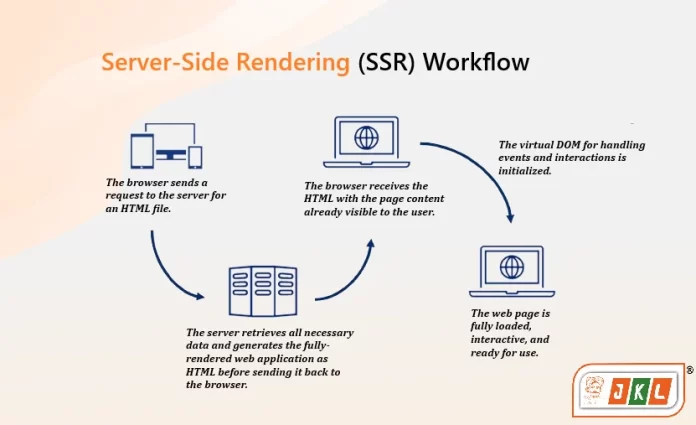
Server-Side Rendering (SSR) is a technique where React components are rendered into fully-formed HTML on the server before being sent to the client’s browser. Unlike traditional client-side rendering, where the browser downloads minimal HTML and relies heavily on JavaScript to build the page’s content, SSR delivers a complete HTML page upfront. This approach ensures that the user and search engine crawlers receive meaningful content immediately, reducing the time to meaningful paint and improving accessibility.
Difference Between SSR and Client-Side Rendering
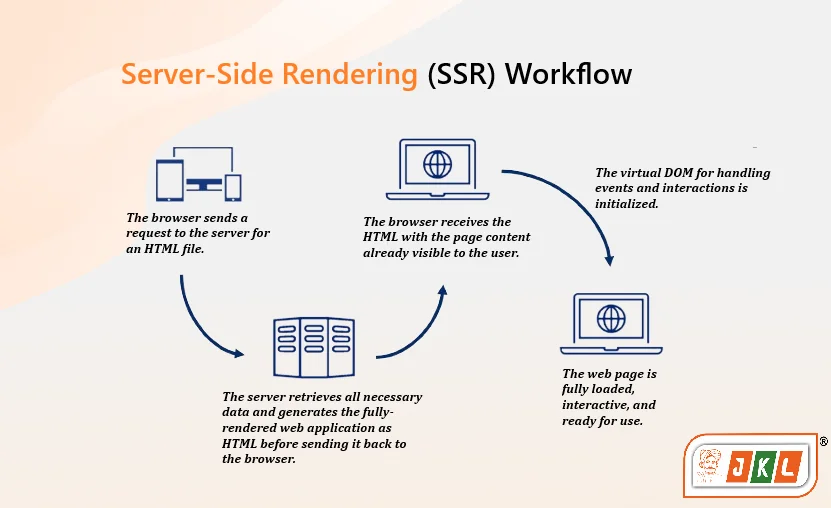
The main difference between SSR and client-side rendering lies in where the React components are executed. With client-side rendering, the browser downloads an empty HTML shell, then executes JavaScript to fetch data and build the user interface. This causes a delay before meaningful content appears, especially problematic for users on slower devices or networks. SSR moves this rendering process to the server, transmitting fully rendered HTML. While the client still hydrates the page to enable interactivity, the visual content is instantly available, avoiding blank or spinner-heavy initial screens.
Why SEO Benefits from SSR
Search engines have historically struggled with client-rendered JavaScript content. Although Google has improved its JavaScript rendering, delays in executing scripts still cause indexing lags and potential ranking drops. Other search engines like Bing or Yahoo have more limited JavaScript execution capabilities, often seeing empty pages if content is loaded dynamically. SSR addresses this by providing fully rendered HTML to crawlers upon request, ensuring accurate indexing and richer search snippets. This boost in visibility can significantly enhance organic traffic, making SSR an essential technique for SEO-conscious React developers.
How SSR Enhances SEO for React Websites
Improved Crawlability by Search Engines
One of the biggest challenges with React SPAs is their reliance on client-side rendering, which results in empty or minimal HTML being delivered to crawlers. This causes search engines to miss or incorrectly index essential site content. SSR solves this by generating the page content on the server, allowing crawlers to access structured and complete HTML immediately. As a result, essential metadata and page text are indexed correctly, improving the page’s visibility in search results. Inaccurate or incomplete content delivery due to JavaScript limitations is thus avoided, expanding crawl coverage and reducing wasted crawl budget from retries on incomplete pages.
Faster Initial Page Load and User Experience
Page load speed directly influences SEO rankings and user engagement. SSR reduces the time-to-first-byte (TTFB) by sending ready-to-display HTML without waiting for large JavaScript bundles to download and execute. This leads to faster rendering of visible content. In addition, advanced SSR techniques like streaming SSR with React Suspense allow progressive sending of HTML chunks, improving perceived speed and interaction readiness. Websites that load quickly not only rank better but also retain visitors longer, enhancing conversion opportunities.
Reducing Bounce Rates Through SSR
Slow or blank pages frustrate users and lead to higher bounce rates, which negatively influence SEO signals like dwell time and page authority. SSR minimizes these issues by delivering meaningful content immediately, even before React fully hydrates the page. With interactive elements becoming usable sooner and a visual page load happening quickly, visitors are less likely to leave out of impatience. This not only improves search engine algorithms’ perception of quality but also boosts user satisfaction and engagement metrics.
Implementing Server-Side Rendering in React Applications
Overview of Popular SSR Frameworks for React
React developers looking to implement SSR can leverage several frameworks designed to simplify this process. Next.js is the most prominent, offering built-in SSR capabilities, static site generation, and incremental static regeneration. Gatsby also supports SSR with a focus on static builds enriched with React components. Other tools like Remix provide modern approaches to SSR with routing and data loading optimizations. These frameworks abstract much of the complex server setup and hydration synchronization, making SSR more accessible.
Step-by-Step Guide to Setting Up SSR
Setting up SSR in a React app typically begins by choosing a suitable framework like Next.js. First, pages are created as React components that export server-friendly APIs, like getServerSideProps in Next.js, to fetch data during server render. The application is then configured to compile both client and server bundles to ensure consistent rendering. Next, hydration logic is carefully implemented to attach event handlers without causing differences between server and client content. Developers must avoid browser-specific APIs on the server or guard them with environment checks. Finally, metadata and dynamic content are rendered server-side to optimize SEO performance.
Common Challenges and How to Overcome Them
One major challenge is hydration mismatches, which occur when server-rendered HTML differs from what React renders on the client. These mismatches often stem from non-deterministic code or usage of browser-only features during server rendering. To resolve this, keep server rendering pure and predictable, excluding client-only logic using feature flags or environment checks. Monitoring hydration warnings during development is crucial to detect and fix issues early.
Another challenge is managing metadata dynamically; if metadata is only generated client-side, crawlers see outdated or missing information. Rendering metadata on the server ensures search engines receive accurate social previews and indexing data. Additionally, developers should consider global latency by adopting edge rendering to serve SSR content closer to users worldwide, reducing delays and improving performance.
Advanced SEO Strategies Using SSR
Leveraging Meta Tags and Structured Data
Serving metadata only on the client side leads to SEO pitfalls since crawlers often access pre-hydrated HTML that lacks accurate meta tags. Rendering meta tags and structured data server-side guarantees completeness and correctness, enhancing search engine understanding and enabling rich snippets. Structured data like schema.org markup should be included in the server response to improve how pages appear in search results, directly impacting click-through rates.
Handling Dynamic Content with SSR
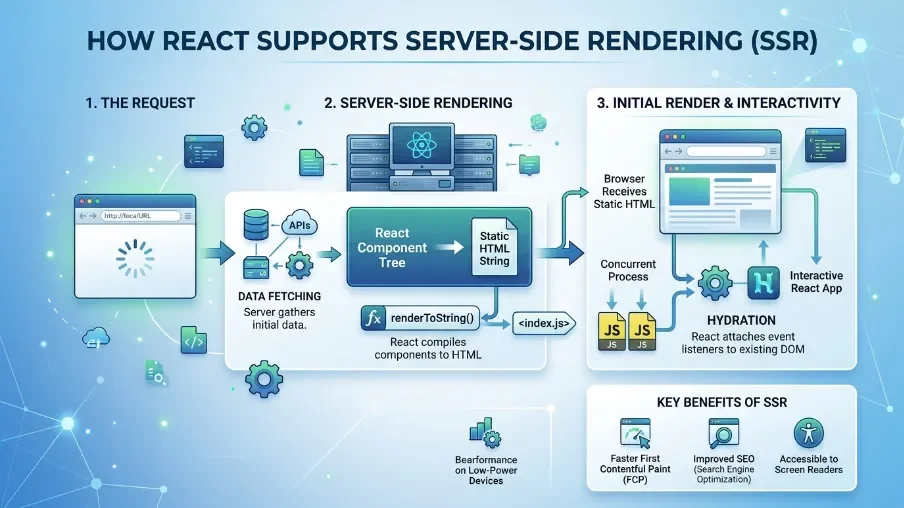
Dynamic content that changes frequently per user request complicates SSR caching strategies. Fully caching such pages at the CDN can lead to stale or incorrect data. To address this, developers can use streaming SSR combined with incremental static regeneration (ISR) for mostly static pages needing periodic updates. Streaming SSR allows progressive content delivery while ISR refreshes cached content behind the scenes, balancing freshness with performance. Another technique is lazy or deferred hydration, which focuses initial server rendering on static parts, delaying interactivity of non-essential widgets until user interaction or idle time.
Caching and Performance Optimization Techniques
Performance optimization is critical to maintaining SEO advantages from SSR. Using edge rendering platforms like Cloudflare Workers or Vercel Edge Functions places server rendering closer to users, reducing latency globally. Implementing HTTP Early Hints and prioritizing critical content streaming with React Suspense further accelerates perceived loading times. Selectively hydrating interactive components instead of the entire page reduces hydration overhead, improving TTI (Time to Interactive). Proper caching strategies must also be designed considering how frequently content changes to avoid serving outdated or incorrect pages to users and crawlers.
Case Studies: SSR Success Stories in React Projects
Boosting Organic Traffic through SSR
Many React-based websites have experienced significant uplifts in organic traffic after adopting SSR. By addressing crawlability issues and improving page load speeds, projects have seen increased page indexation and better visibility for competitive keywords. This uplift frequently results from search engines effectively reading and ranking the server-rendered HTML rather than struggling with JavaScript-heavy client-rendered content. Additionally, reduced bounce rates due to faster initial loads translate into improved user engagement metrics, reinforcing higher SEO rankings.
Measurable Improvements in Search Rankings
Beyond traffic, SSR implementations have enabled measurable improvements in search rankings across various industries. By ensuring accurate metadata delivery and faster page speed scores, sites have climbed SERPs (Search Engine Results Pages). This effect is often compounded when SSR is combined with well-structured data and resource hints that optimize crawling and indexing. These case studies underline the practical benefits of overcoming SSR-related challenges like hydration mismatches and latency through thoughtful architecture and monitoring.
Conclusion: The Future of SEO with Server-Side Rendering
Server-Side Rendering is increasingly crucial for React websites aiming to maximize SEO performance in a competitive digital landscape. The fundamental problem of client-side rendered React apps delivering empty or incomplete content to search engines can be decisively solved through SSR, enhancing crawlability and user experience. When combined with modern techniques like streaming SSR, edge rendering, and selective hydration, SSR not only improves SEO but also provides superior performance and scalability.
As search engines continue to evolve but still face limitations processing client-heavy JavaScript, SSR remains a reliable approach to future-proof React applications. Developers must carefully implement SSR with attention to deterministic rendering, metadata management, and caching to avoid common pitfalls. By doing so, React websites can enjoy higher search rankings, better user engagement, and sustained organic growth.


